
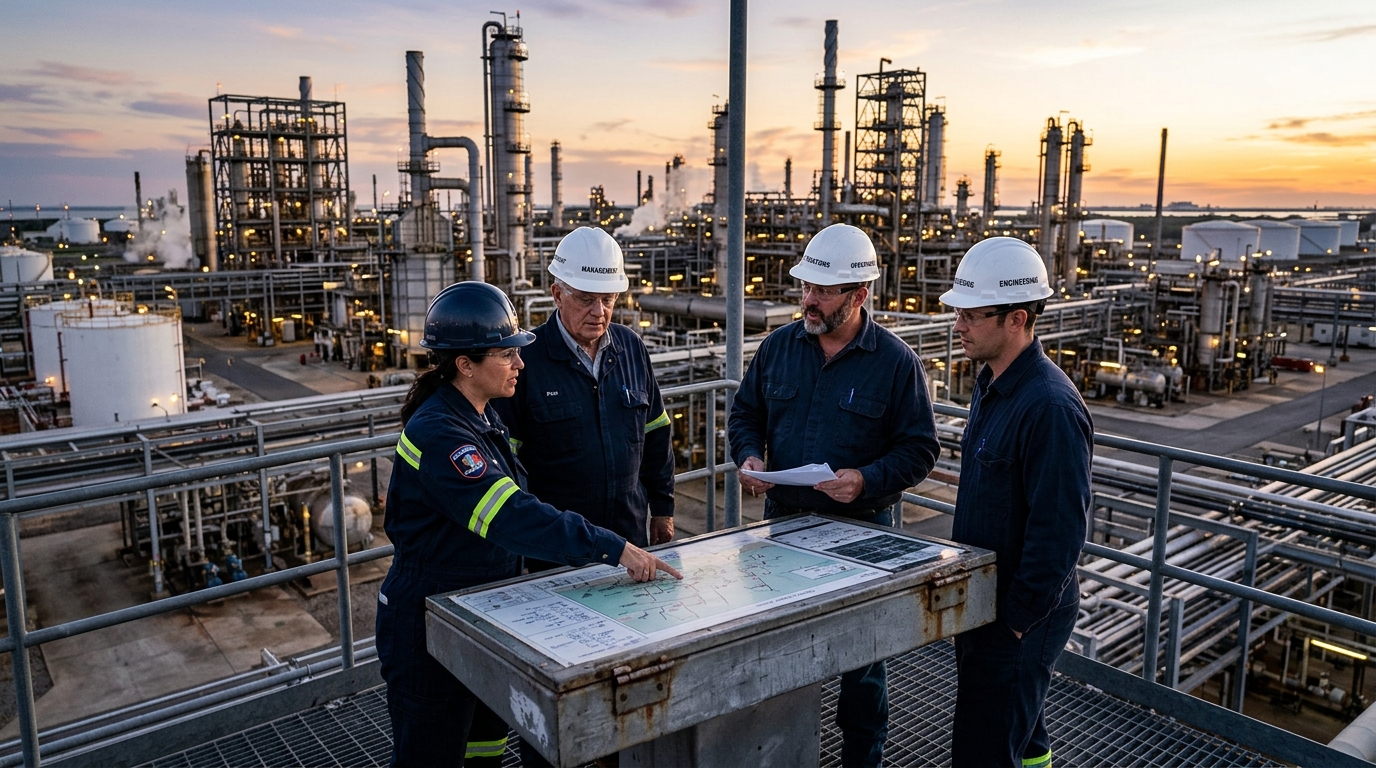
The oil and gas industry operates in a demanding environment where leaders must balance operational performance, safety, financial priorities, workforce capability, regulatory requirements, and changing market conditions. Effective leadership is therefore essential for maintaining performance while guiding teams through complex and often high-pressure situations.
Oil and gas leadership development programs help managers and emerging leaders strengthen the capabilities required to lead people, manage operational challenges, make sound decisions, and support long-term organizational performance. These programs can be particularly valuable for professionals moving from technical or operational roles into positions with greater leadership responsibility.
Why Leadership Development Matters in Oil and Gas
Technical expertise is fundamental to the oil and gas sector, but technical capability alone does not necessarily prepare professionals to lead teams effectively.
Managers may be required to coordinate multidisciplinary teams, manage competing priorities, communicate with stakeholders, respond to operational challenges, and make decisions where the consequences can be significant.
Leadership development provides a structured way to build these capabilities while helping organizations develop a stronger pipeline of future leaders.
Developing Leaders From Within
Many oil and gas organizations have experienced professionals with extensive technical and operational knowledge. Developing these employees into capable leaders can help organizations retain valuable expertise while strengthening their internal talent pipeline.
Leadership programs can help high-potential employees transition from being individual contributors or technical specialists into managers who can motivate teams, delegate effectively, manage performance, and make strategic decisions.
This transition requires a different mindset. Successful leadership is no longer measured only by individual technical performance but by the ability to achieve results through others.
Strengthening Strategic Decision-Making
Oil and gas leaders often make decisions involving operational performance, resources, costs, people, risks, and long-term business objectives.
Leadership development programs can strengthen strategic thinking by helping managers assess complex situations, evaluate alternatives, consider potential consequences, and align decisions with organizational priorities.
Strong decision-making also requires leaders to recognize when they have sufficient information to act and when additional analysis or specialist input is necessary.
Leading High-Performance Teams
Oil and gas operations frequently depend on collaboration between employees with different technical backgrounds and responsibilities. Leaders must create clear expectations, coordinate activities, encourage accountability, and maintain effective communication.
Leadership training can help managers develop practical skills in delegation, team motivation, conflict management, coaching, and performance improvement.
When employees understand their responsibilities and how their work contributes to wider objectives, teams can operate with greater clarity and coordination.
Leading in Safety-Critical Environments
Safety is a fundamental consideration across oil and gas operations. Leadership behavior can strongly influence how employees approach procedures, communication, reporting, and operational discipline.
Leadership development can help managers understand how their actions and decisions shape workplace behavior and organizational culture.
Effective leaders demonstrate accountability, encourage appropriate communication, listen to employee concerns, and reinforce the importance of following established safety practices.
Managing Change and Operational Challenges
The oil and gas industry continues to experience technological, operational, economic, and workforce changes. Leaders need to guide employees through these changes while maintaining productivity and engagement.
Change leadership skills help managers communicate the reasons for change, address concerns, manage resistance, and maintain focus on organizational objectives.
This is particularly important when organizations introduce new technologies, restructure operations, modify processes, or implement new strategic priorities.
Improving Communication and Stakeholder Management
Oil and gas leaders may communicate with employees, senior executives, contractors, technical specialists, regulators, suppliers, and other stakeholders.
The ability to communicate clearly across different audiences is therefore essential. Leadership programs can help managers develop stronger presentation, negotiation, listening, influencing, and stakeholder-management skills.
Effective communication can reduce misunderstandings, improve collaboration, and support better decision-making across functions.
Building Accountability and Performance Culture
High-performing organizations require clear standards and accountability. Leaders need to establish expectations, monitor performance, recognize achievements, and address performance gaps when necessary.
Leadership development programs can provide practical frameworks for managing performance while maintaining constructive relationships with employees.
A strong performance culture is not simply about achieving targets. It also involves creating an environment where employees understand expectations, take ownership, and receive appropriate support to succeed.
Preparing the Next Generation of Oil and Gas Leaders
Leadership development should not be limited to current senior managers. Organizations can also identify emerging leaders and provide development opportunities before they move into larger roles.
Programs for emerging leaders can focus on communication, self-awareness, decision-making, teamwork, strategic thinking, and people management.
Building leadership capabilities early creates greater readiness for future responsibilities and can reduce dependence on external recruitment for critical management positions.
Measuring the Impact of Leadership Development
Organizations can strengthen the value of leadership programs by connecting learning outcomes to workplace performance.
Rather than measuring success only through attendance or participant satisfaction, organizations can consider improvements in leadership behavior, team performance, decision quality, employee engagement, and achievement of operational objectives.
Follow-up coaching, workplace assignments, manager feedback, and performance reviews can also help reinforce learning after the program ends.
Building Stronger Leaders for a Changing Industry
The future of oil and gas leadership will require more than technical expertise. Leaders need the ability to manage people, navigate uncertainty, communicate effectively, make informed decisions, and align operational priorities with wider business objectives.
Well-designed oil and gas leadership development programs provide organizations with a structured approach to building these capabilities. By investing in current and emerging leaders, organizations can strengthen their management pipeline, improve team performance, and prepare their workforce for future challenges.
At Solomon People Solutions, leadership development programs can be tailored to organizational requirements, participant experience levels, and specific leadership competencies. Practical, industry-relevant learning can help professionals move from technical expertise toward confident and effective leadership.
