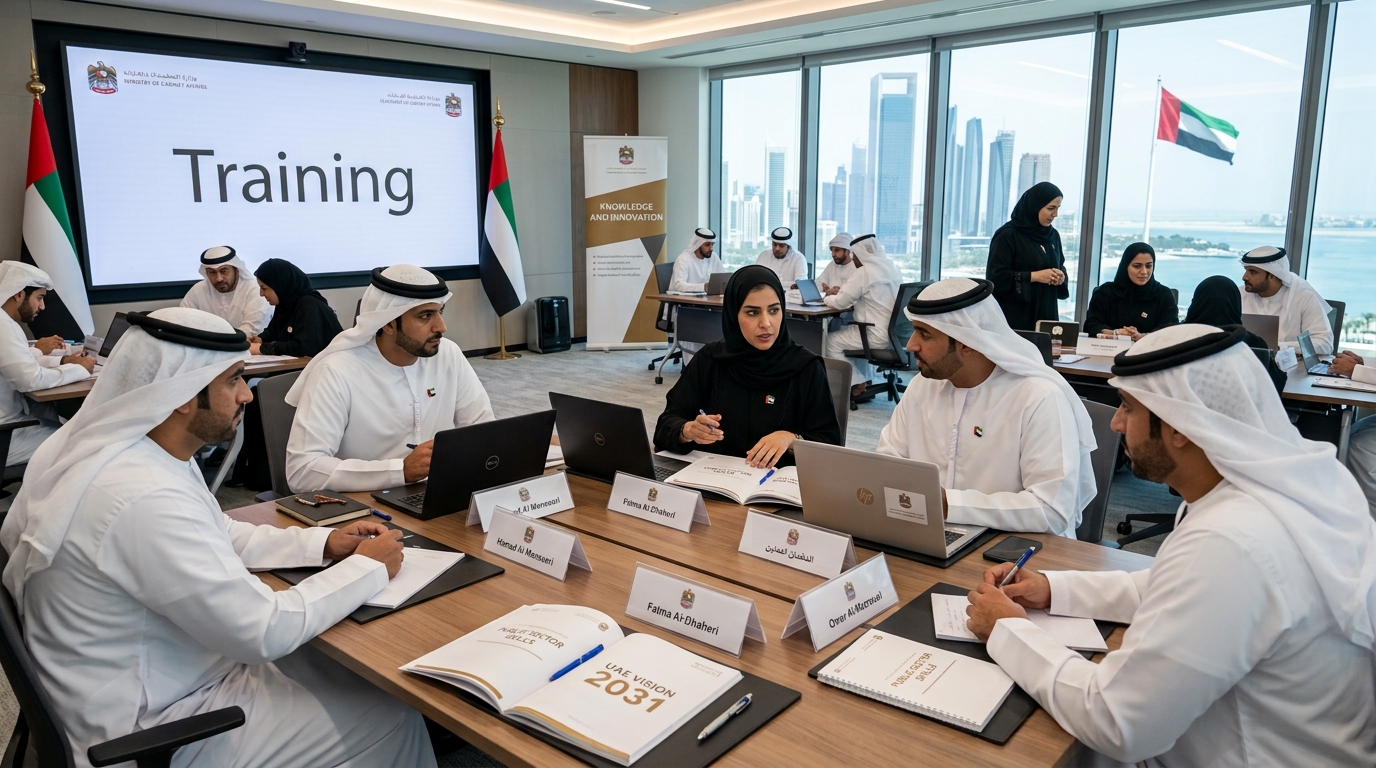
Government organizations operate in an environment where service quality, operational efficiency, employee capability, and continuous improvement are increasingly important. As responsibilities become more complex and technology continues to transform the way public services are delivered, government entities need employees who can adapt, make informed decisions, and perform effectively in changing environments.
This makes government sector training an important part of organizational development. Effective training goes beyond delivering information. It should help employees develop practical skills that can be applied directly to their roles, while supporting broader organizational objectives and service standards.
Why Training Matters in the Government Sector
Government employees work across a wide range of functions, from administration and finance to human resources, leadership, customer service, project management, and technology. Each function requires specific technical and professional capabilities.
At the same time, government organizations must continuously respond to new policies, technologies, service expectations, and operational requirements. Training provides a structured way to help employees keep their knowledge and skills relevant.
Well-designed training programs can support:
- Improved employee performance
- Stronger leadership capabilities
- Better decision-making
- More effective communication
- Greater operational efficiency
- Improved customer and stakeholder service
- Continuous professional development
The goal is not simply to increase the number of training hours completed. The real value comes from developing capabilities that contribute to better workplace performance.
Developing Future Government Leaders
Leadership development is particularly important for government organizations. Managers and emerging leaders are expected to manage teams, implement strategic priorities, make decisions, and lead change.
Leadership training can help participants strengthen skills such as strategic thinking, delegation, communication, problem-solving, emotional intelligence, and performance management.
Developing these capabilities across different levels of the organization can also help create a stronger internal leadership pipeline.
Building Stronger Professional Skills
Employees at every level benefit from developing professional skills that support effective workplace performance.
Training in areas such as business communication, presentation skills, negotiation, problem-solving, time management, teamwork, and customer service can improve how employees interact with colleagues, stakeholders, and the public.
These capabilities are particularly valuable because they can be applied across different departments and job functions.
Technical and Functional Training
Government entities also require specialized training aligned with specific professional responsibilities.
Functional training may cover areas such as:
- Human resources management
- Finance and budgeting
- Procurement and contract management
- Project management
- Risk management
- Supply chain and logistics
- Data analysis
- Digital transformation
- Governance and compliance
- Monitoring and evaluation
The right training approach depends on the organization’s objectives, employee roles, current capability levels, and future requirements.
Supporting Digital Transformation
Digital transformation continues to change how government organizations operate and deliver services. Employees therefore need more than access to new technology; they need the skills and confidence to use digital tools effectively.
Training can support digital transformation by helping employees understand new systems, improve digital workflows, analyze information, and adapt to technology-driven changes.
Organizations can also combine technical digital training with broader capabilities such as change management, innovation, critical thinking, and problem-solving.
Training That Supports Organizational Objectives
Effective government training should be connected to organizational priorities. A program should not be selected simply because it is popular or relevant to a general competency framework.
Instead, organizations can begin by identifying specific capability gaps and determining what employees need to do differently after the training.
This approach helps ensure that training is relevant to actual workplace requirements and provides a clearer basis for evaluating its impact.
Customized Training for Government Organizations
Different government entities have different responsibilities, structures, employee profiles, and strategic priorities. A standardized training program may therefore not always provide the most effective solution.
Customized training allows organizations to adapt content, examples, activities, and learning outcomes to their specific environment.
Programs can also be designed for different levels, from frontline employees and supervisors to middle managers and senior leaders.
Measuring Training Effectiveness
Training effectiveness should be considered beyond participant attendance or satisfaction surveys.
Organizations can assess whether participants have improved their knowledge, developed new skills, changed workplace behaviors, and contributed to improved performance.
Useful measures may include:
- Knowledge and skills assessments
- Participant feedback
- Manager observations
- Workplace performance indicators
- Application of learning
- Behavioral improvements
- Achievement of relevant business objectives
This creates a stronger connection between employee development and organizational performance.
Creating a Culture of Continuous Learning
Government organizations face continuous changes in technology, processes, policies, and service expectations. As a result, learning should not be treated as a one-time activity.
A strong learning culture encourages employees to continually develop their knowledge, share expertise, learn from experience, and adapt to new requirements.
Training programs are one part of this process. Coaching, knowledge sharing, mentoring, practical assignments, and continuous professional development can further reinforce learning.
Choosing the Right Government Training Partner
Selecting an appropriate training provider is an important part of achieving meaningful learning outcomes. Organizations should consider the provider’s subject-matter expertise, trainer experience, course relevance, customization capabilities, delivery methods, and ability to understand organizational requirements.
The strongest training solutions combine relevant content with practical application. Participants should leave the program with knowledge and tools they can use in their everyday responsibilities.
Building Capability for the Future
Government sector training plays an important role in strengthening organizational capability and preparing employees for changing requirements. From leadership development and professional skills to technical competencies and digital transformation, effective learning programs can support both individual and organizational performance.
For government entities in the UAE, the focus should be on training that is practical, relevant, measurable, and aligned with organizational priorities.
At Solomon People Solutions, we support organizations with professional training solutions designed around their workforce needs, competency requirements, and development objectives. By focusing on practical learning and workplace application, training can become more than an employee development activity—it can become a strategic investment in organizational capability.
