
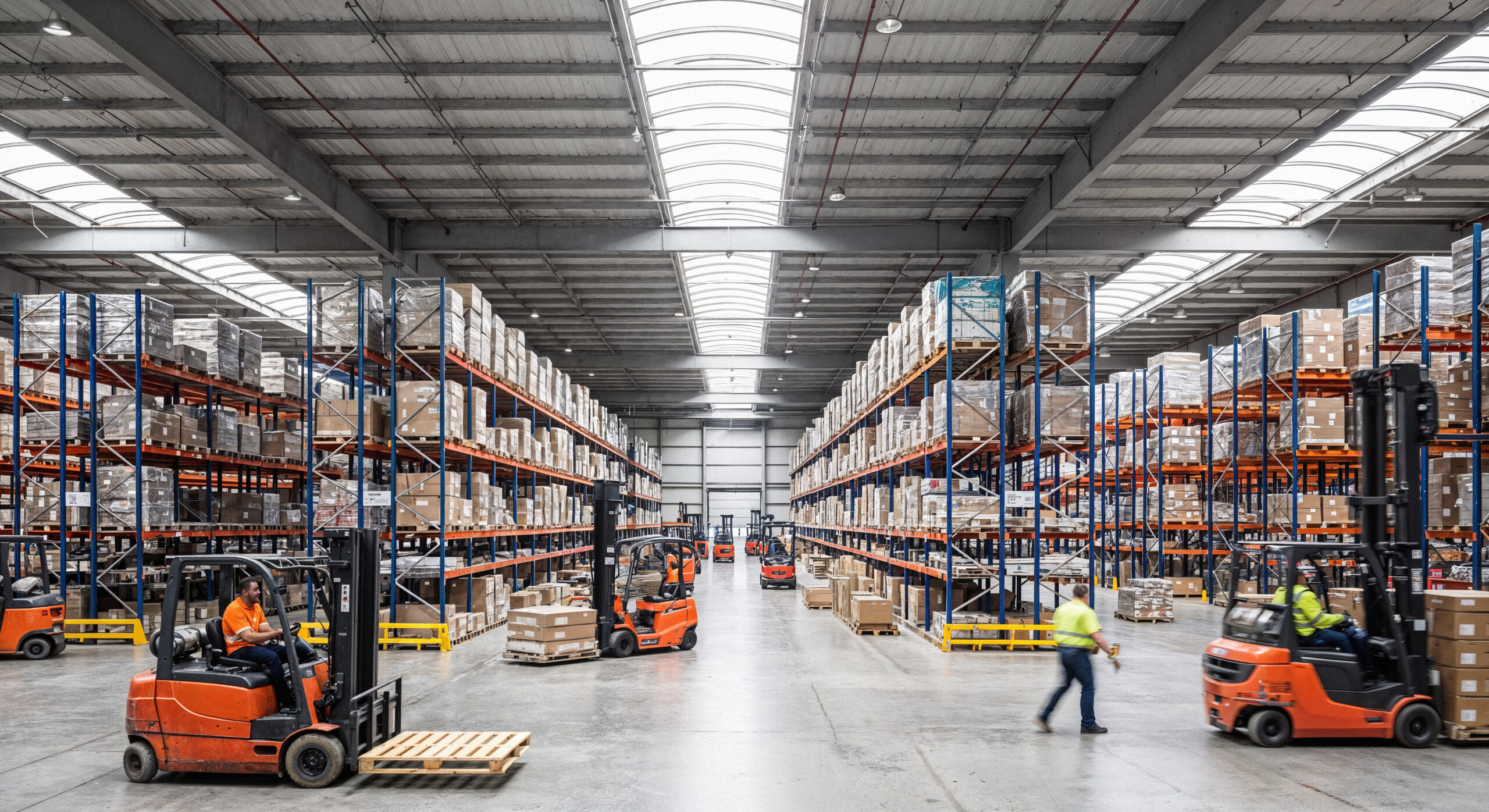
Warehouses have evolved far beyond being simple storage facilities. In today’s fast-paced supply chains, warehouses serve as strategic hubs that directly influence customer satisfaction, operational efficiency, inventory accuracy, and organizational profitability. With the rapid growth of e-commerce, globalization, automation, and digital technologies, effective warehouse management has become a critical business function.
Organizations that invest in modern warehouse management practices can reduce operating costs, improve inventory visibility, increase order accuracy, shorten delivery times, and enhance overall supply chain performance.
Our Warehouse Management Training in Dubai provides warehouse professionals, logistics teams, supply chain managers, and operations leaders with practical knowledge, globally recognized best practices, and hands-on techniques to manage warehouse operations efficiently and effectively.
Why Warehouse Management Matters
Warehouse performance directly impacts every stage of the supply chain. Poor warehouse management can lead to:
- Inventory inaccuracies
- Delayed deliveries
- Increased operational costs
- Stock shortages
- Overstock situations
- Damaged products
- Poor customer service
- Low employee productivity
- Inefficient warehouse utilization
- Safety incidents
An efficiently managed warehouse enables organizations to:
- Improve inventory accuracy
- Increase order fulfillment speed
- Reduce operating costs
- Optimize warehouse space
- Improve customer satisfaction
- Minimize product damage
- Enhance workforce productivity
- Support business growth
What Is Warehouse Management?
Warehouse Management is the systematic planning, organizing, controlling, and optimizing of warehouse operations to ensure efficient storage, movement, tracking, and distribution of goods.
It encompasses activities such as:
- Receiving and inspection
- Inventory management
- Storage optimization
- Picking and packing
- Shipping and dispatch
- Warehouse layout planning
- Equipment utilization
- Workforce management
- Warehouse safety
- Performance measurement
Modern warehouse management combines operational excellence with technology to improve visibility and efficiency throughout the supply chain.
Why Organizations Need Warehouse Management Training
Many organizations face common warehouse challenges, including:
- Poor inventory visibility
- Inaccurate stock records
- Inefficient warehouse layouts
- Slow order processing
- High labor costs
- Excess inventory
- Limited warehouse capacity
- Manual processes
- Safety risks
- Lack of performance measurement
Professional training equips employees with the skills and knowledge to address these challenges while supporting continuous operational improvement.
Learning Objectives
By the end of this Warehouse Management Training, participants will be able to:
- Understand warehouse management principles
- Optimize warehouse layout and storage systems
- Improve inventory accuracy
- Apply efficient receiving and dispatch procedures
- Enhance picking and packing processes
- Implement warehouse performance metrics
- Utilize Warehouse Management Systems (WMS)
- Improve warehouse safety and compliance
- Manage warehouse teams effectively
- Develop continuous improvement strategies
Who Should Attend?
This course is ideal for:
- Warehouse Managers
- Warehouse Supervisors
- Storekeepers
- Inventory Controllers
- Logistics Managers
- Supply Chain Professionals
- Procurement Officers
- Distribution Managers
- Operations Managers
- Material Controllers
- Warehouse Coordinators
- Inventory Analysts
- Shipping and Receiving Personnel
- Manufacturing Professionals
- Retail Distribution Teams
Warehouse Management Training Modules
Module 1: Fundamentals of Warehouse Management
Participants develop a strong understanding of warehouse operations and their role within the supply chain.
Topics include:
- Warehouse functions
- Types of warehouses
- Warehouse processes
- Supply chain integration
- Warehouse objectives
- Material flow
- Operational planning
- Warehouse performance fundamentals
Workshop:
Map the workflow of a warehouse from receiving to shipping.
Module 2: Warehouse Layout and Storage Optimization
Efficient warehouse design improves productivity and reduces operational costs.
Topics include:
- Warehouse layout design
- Storage systems
- Slotting strategies
- Space utilization
- Product classification (ABC Analysis)
- Material handling flow
- Cross-docking concepts
- Warehouse expansion planning
Exercise:
Design an optimized warehouse layout based on product movement.
Module 3: Inventory Management and Stock Control
Inventory accuracy is essential for warehouse efficiency.
Topics include:
- Inventory control methods
- Stock rotation (FIFO, LIFO, FEFO)
- Cycle counting
- Physical inventory
- Safety stock
- Reorder points
- Inventory accuracy
- Inventory reconciliation
Case Study:
Improve inventory accuracy using cycle counting techniques.
Module 4: Receiving, Put-Away, Picking, and Dispatch
Efficient warehouse processes reduce delays and improve customer satisfaction.
Topics include:
- Receiving procedures
- Goods inspection
- Put-away strategies
- Order picking methods
- Packing standards
- Shipping documentation
- Dispatch planning
- Returns management
Simulation:
Optimize warehouse order fulfillment operations.
Module 5: Warehouse Technology and Warehouse Management Systems (WMS)
Technology plays a vital role in modern warehouse operations.
Topics include:
- Warehouse Management Systems (WMS)
- Barcode technology
- RFID systems
- Mobile data collection
- Automation
- Robotics
- Internet of Things (IoT)
- Warehouse dashboards
Workshop:
Explore how WMS improves inventory visibility and operational efficiency.
Module 6: Material Handling Equipment and Automation
Selecting appropriate equipment improves productivity and safety.
Topics include:
- Forklifts
- Pallet trucks
- Conveyors
- Automated Storage and Retrieval Systems (AS/RS)
- Picking technologies
- Equipment maintenance
- Capacity planning
- Warehouse automation trends
Exercise:
Match equipment selection with warehouse operational requirements.
Module 7: Warehouse Safety, Security, and Compliance
Safe warehouses reduce risks and improve operational reliability.
Topics include:
- Warehouse safety procedures
- Hazard identification
- Safe material handling
- Fire prevention
- Emergency response
- Occupational health and safety
- Warehouse security
- Regulatory compliance
Activity:
Conduct a warehouse safety inspection and identify improvement opportunities.
Module 8: Warehouse Performance Measurement
Performance measurement supports continuous improvement.
Topics include:
- Warehouse KPIs
- Order accuracy
- Inventory accuracy
- Picking productivity
- Space utilization
- Labor productivity
- Cycle time
- Performance dashboards
Workshop:
Develop a warehouse KPI scorecard.
Module 9: Leadership and Workforce Management
People remain the most valuable warehouse resource.
Topics include:
- Workforce planning
- Staff scheduling
- Team leadership
- Employee motivation
- Performance management
- Training and development
- Communication
- Continuous improvement culture
Exercise:
Create a workforce productivity improvement plan.
Module 10: Future Trends and Continuous Improvement
Participants explore strategies for building future-ready warehouse operations.
Topics include:
- Lean warehousing
- Six Sigma applications
- Sustainable warehouse operations
- Artificial Intelligence (AI)
- Predictive analytics
- Digital transformation
- Green warehousing
- Warehouse optimization roadmap
Capstone Project:
Develop a comprehensive Warehouse Improvement Plan for a real or simulated organization.
Practical Learning Methodology
The training emphasizes practical application through:
- Interactive lectures
- Warehouse simulations
- Real-world case studies
- Group discussions
- Warehouse layout exercises
- Inventory management workshops
- KPI development activities
- Technology demonstrations
- Problem-solving exercises
- Capstone improvement project
Participants leave with practical tools and action plans that can be immediately implemented in their workplace.
Key Skills Participants Will Develop
Upon successful completion of the course, participants will be able to:
- Plan efficient warehouse operations
- Optimize warehouse layouts
- Improve inventory accuracy
- Manage warehouse workflows
- Apply Warehouse Management Systems (WMS)
- Analyze warehouse performance using KPIs
- Enhance warehouse safety
- Improve labor productivity
- Reduce operational costs
- Lead continuous warehouse improvement initiatives
Benefits for Individuals
Participants will gain:
- Advanced warehouse management knowledge
- Improved inventory management skills
- Better operational planning capabilities
- Enhanced leadership and supervisory skills
- Practical experience with warehouse technologies
- Greater confidence in decision-making
- Increased career opportunities in logistics and supply chain management
- Professional development aligned with industry best practices
Benefits for Organizations
Organizations benefit through:
- Higher inventory accuracy
- Faster order fulfillment
- Reduced warehouse operating costs
- Improved warehouse space utilization
- Enhanced customer satisfaction
- Increased employee productivity
- Lower product damage rates
- Stronger safety performance
- Better supply chain visibility
- Sustainable operational excellence
Why Choose Dubai for Warehouse Management Training?
Dubai is one of the world’s leading logistics and trade hubs, connecting businesses across Asia, Europe, and Africa. Its advanced infrastructure, world-class ports, airports, and distribution centers make it an ideal environment for learning modern warehouse management practices.
Professionals attending training in Dubai gain exposure to international logistics standards, smart warehouse technologies, and innovative supply chain strategies that can be applied across various industries worldwide.
Industries That Benefit from Warehouse Management Training
This course is valuable for professionals working in:
- Logistics and Supply Chain
- Manufacturing
- Retail and E-commerce
- Wholesale Distribution
- Oil and Gas
- Healthcare and Pharmaceuticals
- Food and Beverage
- Automotive
- Construction
- Aviation
- FMCG
- Third-Party Logistics (3PL)
- Government Warehousing
- Import and Export Operations
Frequently Asked Questions (FAQs)
What is Warehouse Management?
Warehouse Management involves planning, organizing, controlling, and optimizing warehouse operations to ensure efficient storage, inventory management, order fulfillment, and distribution of goods.
Is this course suitable for beginners?
Yes. The course is designed for both newcomers and experienced professionals looking to strengthen their warehouse management skills and adopt modern best practices.
Does the training include Warehouse Management Systems (WMS)?
Yes. Participants learn the principles of Warehouse Management Systems (WMS), barcode technology, RFID, automation, and digital tools that improve warehouse efficiency and inventory visibility.
Will participants engage in practical activities?
Absolutely. The course includes warehouse simulations, layout planning exercises, inventory control workshops, KPI development, safety assessments, and a comprehensive warehouse improvement project.
Can the training be customized for specific industries?
Yes. The program can be tailored to meet the operational requirements of industries such as manufacturing, retail, logistics, healthcare, oil and gas, FMCG, and e-commerce.
Modern warehouse management is a key driver of operational excellence, supply chain resilience, and customer satisfaction. As organizations face increasing demands for speed, accuracy, and cost efficiency, investing in warehouse management capabilities has become essential for maintaining a competitive advantage.
Our Warehouse Management Training by Solomon People Solutions equips professionals with the practical skills, strategic knowledge, and modern tools needed to optimize warehouse operations, improve inventory control, enhance workforce productivity, and support sustainable business growth. Through hands-on learning, real-world case studies, and industry best practices, participants are prepared to transform warehouse performance and contribute to long-term organizational success.
Enhance warehouse operations with our Warehouse Management Training in Dubai. Learn inventory control, warehouse layout, WMS, KPIs, automation, safety, and best practices for efficient warehouse management.
